


While using the RBC mobile app, I noticed the payment flow required navigating through multiple screens and manually entering details for every transaction. There was no support for modern payment methods like QR code scanning, which meant even simple transfers felt slower than they should. I took this as an opportunity to explore how the payment experience could be streamlined through a concept redesign.
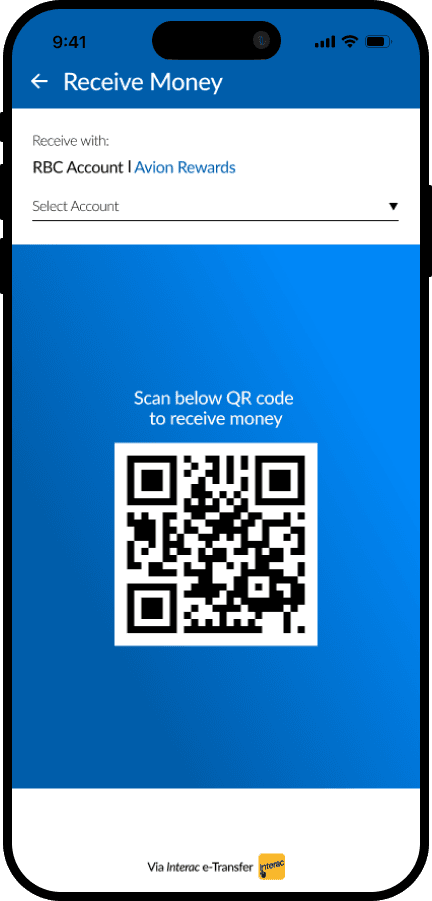
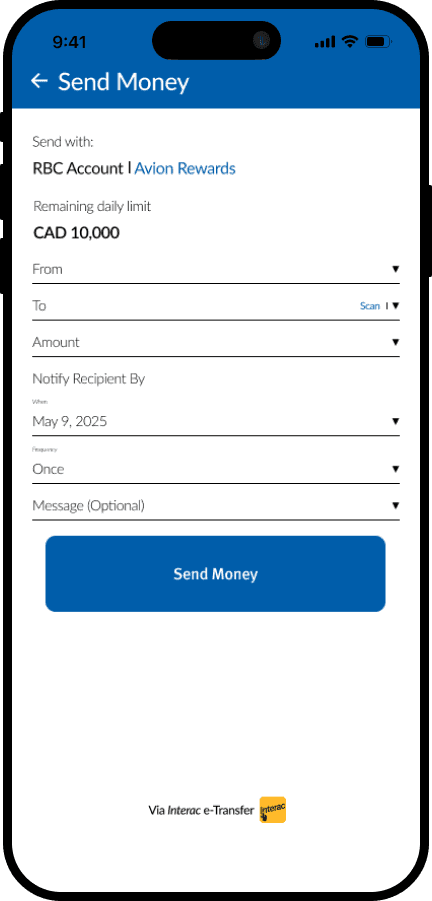
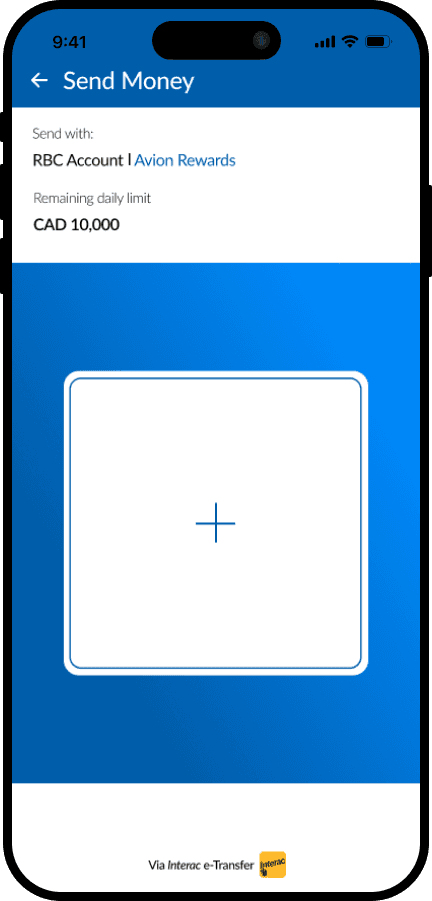
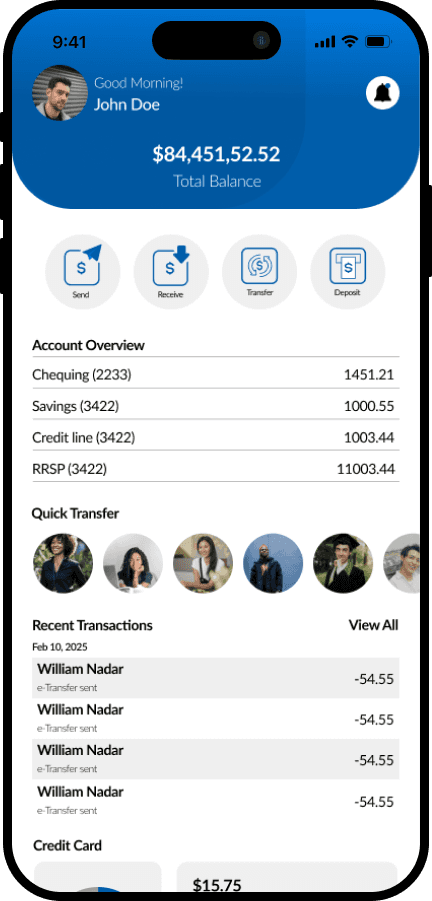
This concept introduces a simplified payment flow with QR code scanning, reducing the steps needed to complete a transaction. The interface was decluttered and reorganized to surface essential tasks balances, bill pay, and transfers right from the home screen. Based on usability testing with 5 participants.
The projected impact includes:
Design Process
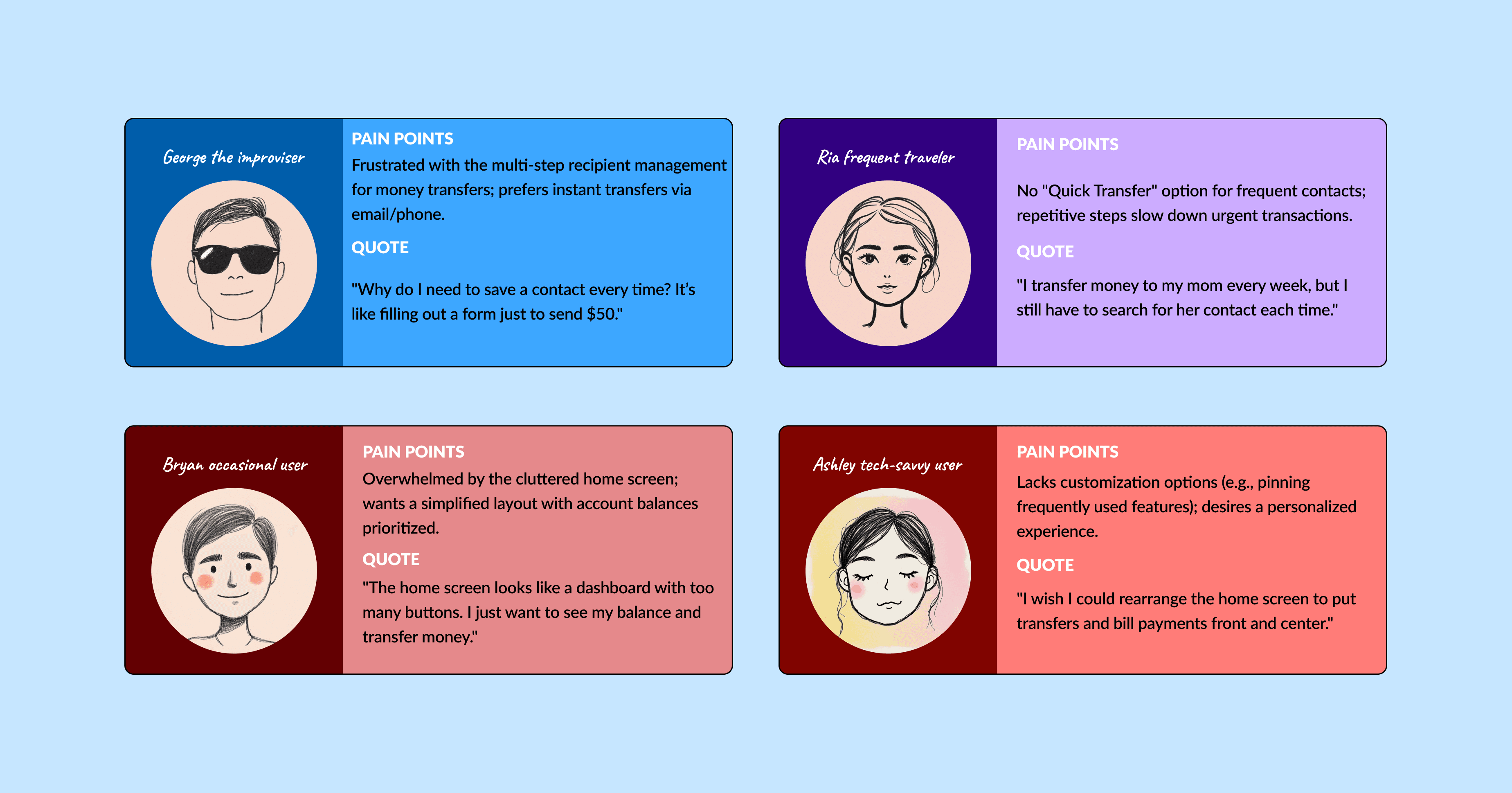
Understanding user pain points and industry trends was key to rethinking how RBC's mobile banking experience could be improved for clarity and ease.
Conducted a heuristic evaluation of the current RBC app alongside competitor banking apps to identify common usability issues and improvement opportunities.
Performed self-initiated task analysis walking through key user flows like checking balances and paying bills to spot friction points in navigation and accessibility.
Researched emerging trends in mobile payments, which informed the decision to incorporate QR code functionality for faster and more convenient transactions.
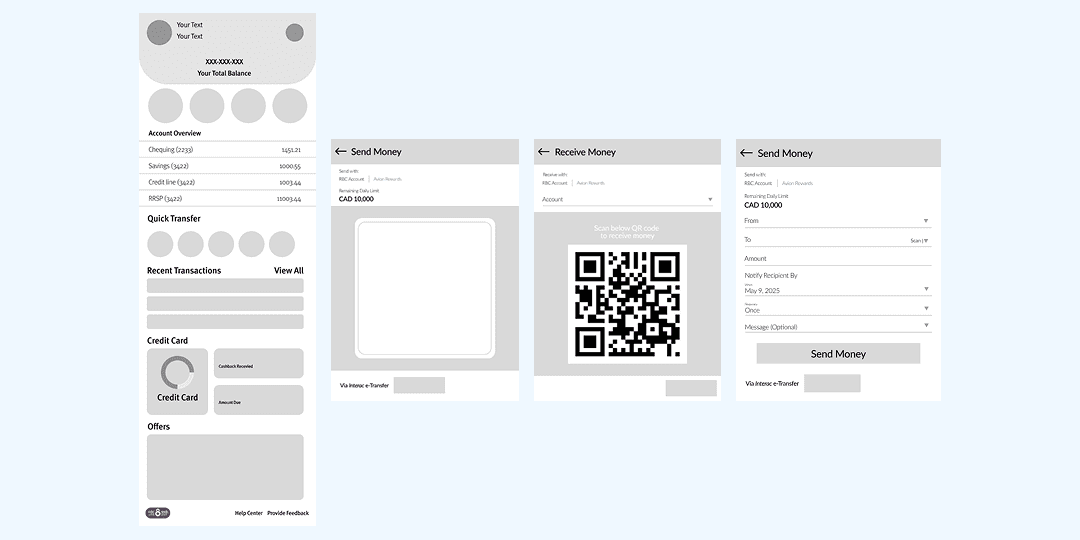
Early wireframes explored layout options to optimize space, prioritize key features, and create a seamless, user-friendly flow. This phase laid the foundation for an intuitive and efficient mobile banking experience.
Using insights from my research and analysis, I designed clean, user-friendly interfaces that aim to improve navigation and highlight key features. The concept focuses on clarity, accessibility, and efficiency reimagining the banking experience while integrating modern payment options like QR codes.
Clear, efficient banking.
Prioritized key actions like balance and bill payments on the home screen for quick access.
Used consistent visual hierarchy and spacing to reduce clutter and improve focus.
Integrated QR code payments to streamline transactions and modernize user experience.
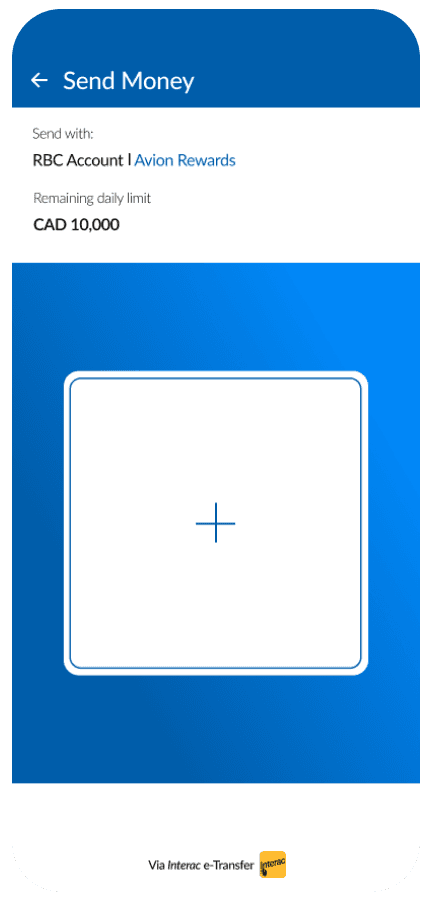
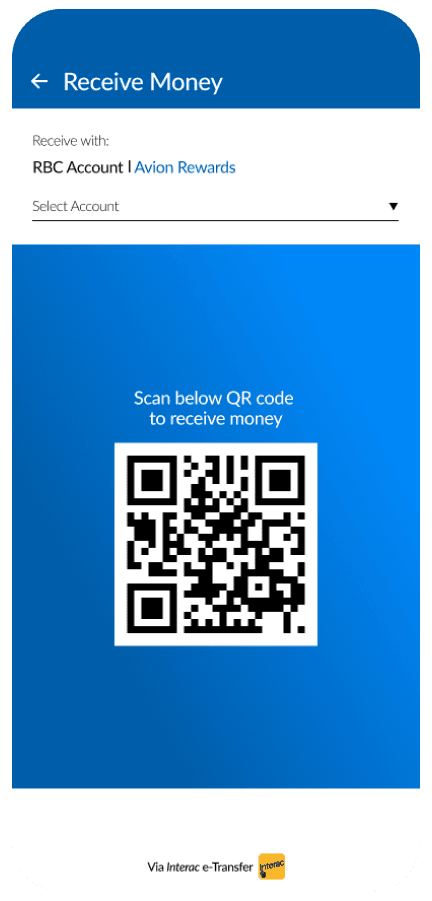
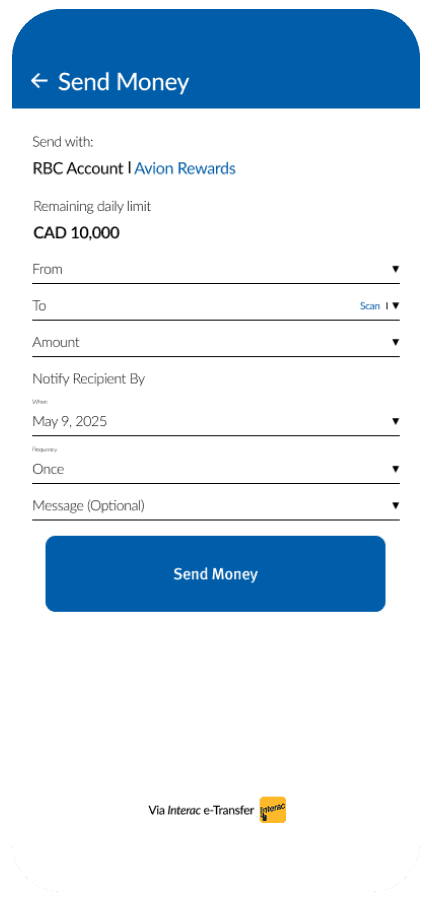
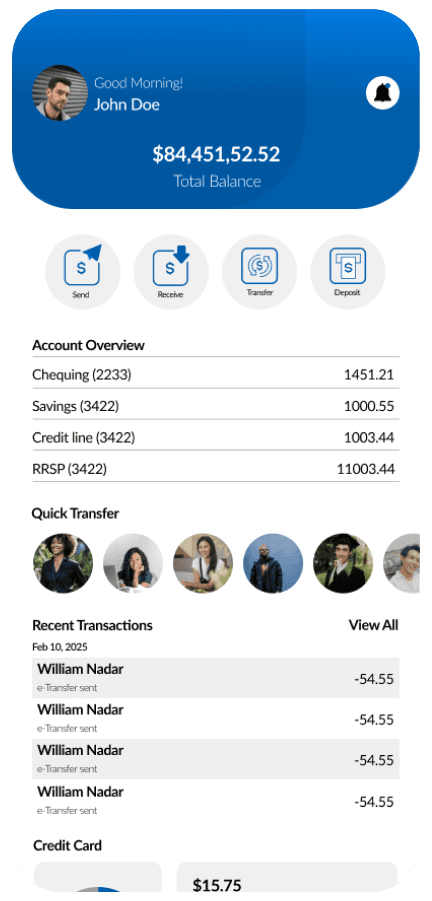
This concept redesign explores how usability could be improved by making key features like balance checking and bill payments easily accessible from the home screen. The integration of QR code payments modernizes the transaction process for added convenience. Based on usability testing with participants, projected improvements include a 40% increase in navigation efficiency, 30% reduction in task completion time, and 25% boost in overall app engagement.